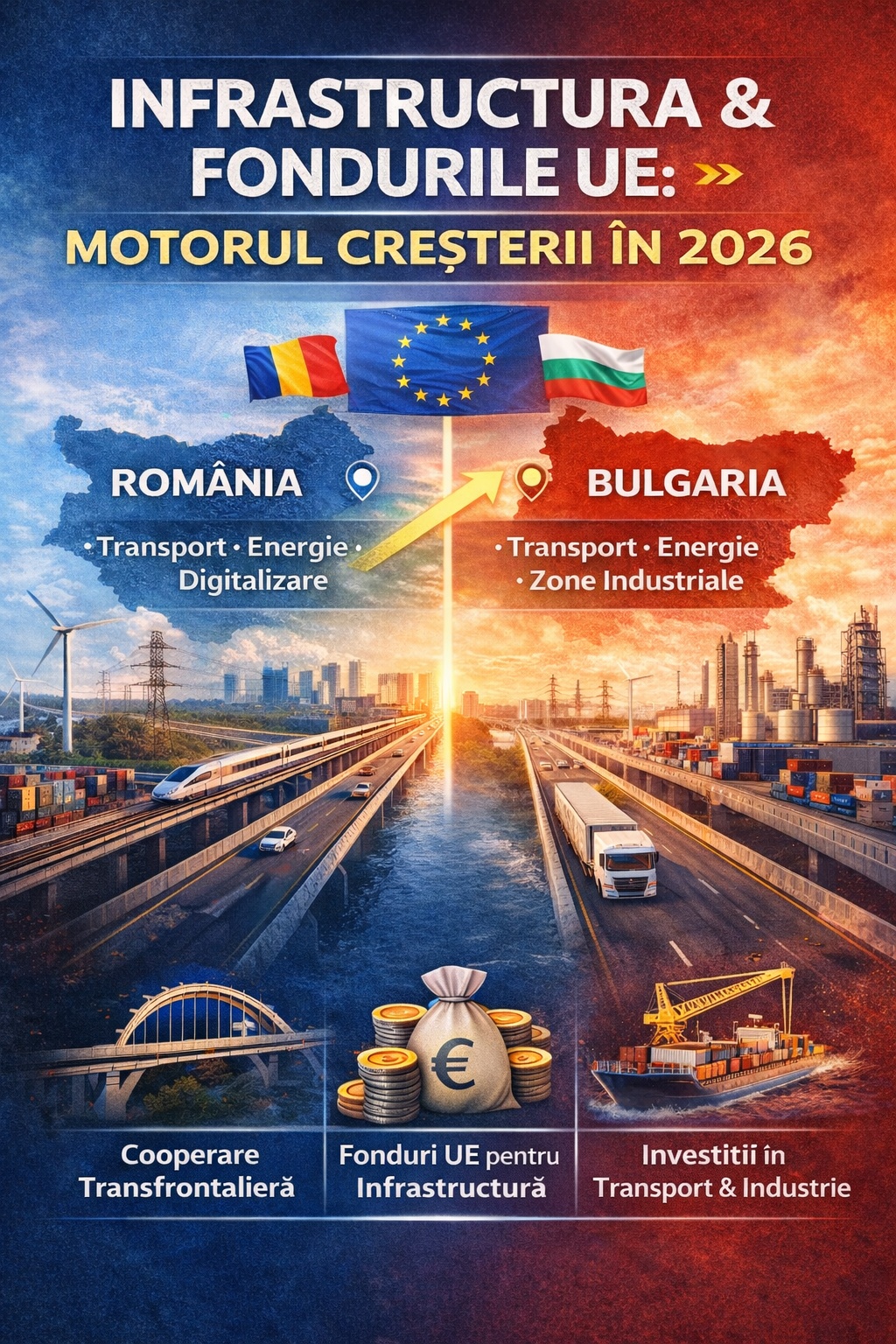
În săptămâna analizată, presa economică din România și Bulgaria a evidențiat un punct comun major: accelerarea proiectelor de infrastructură finanțate din fonduri europene și presiunea asupra autorităților de a îmbunătăți ritmul de implementare în 2026.
În România, atenția s-a concentrat pe proiectele de transport, energie și digitalizare incluse în PNRR și în cadrul financiar multianual al UE. Mediul de afaceri a subliniat importanța predictibilității administrative și a deblocării rapide a plăților pentru a susține sectoare precum construcțiile, logistica și industria materialelor.
În Bulgaria, accentul a fost pus pe modernizarea coridoarelor de transport, infrastructura energetică și dezvoltarea zonelor industriale. Autoritățile au transmis semnale privind intensificarea absorbției fondurilor europene, considerate esențiale pentru creșterea competitivității și atragerea investițiilor străine.
La nivel regional, aceste evoluții au implicații importante:
• Infrastructura influențează direct costurile logistice și eficiența lanțurilor de aprovizionare.
• Fondurile europene reprezintă principalul catalizator al cererii în construcții și industrie.
• Cooperarea transfrontalieră România–Bulgaria devine tot mai relevantă pentru proiectele din zona Dunării și Mării Negre.
În contextul unei marje fiscale limitate în ambele state, eficiența utilizării fondurilor UE și capacitatea administrativă de implementare vor determina ritmul real de creștere economică în 2026.